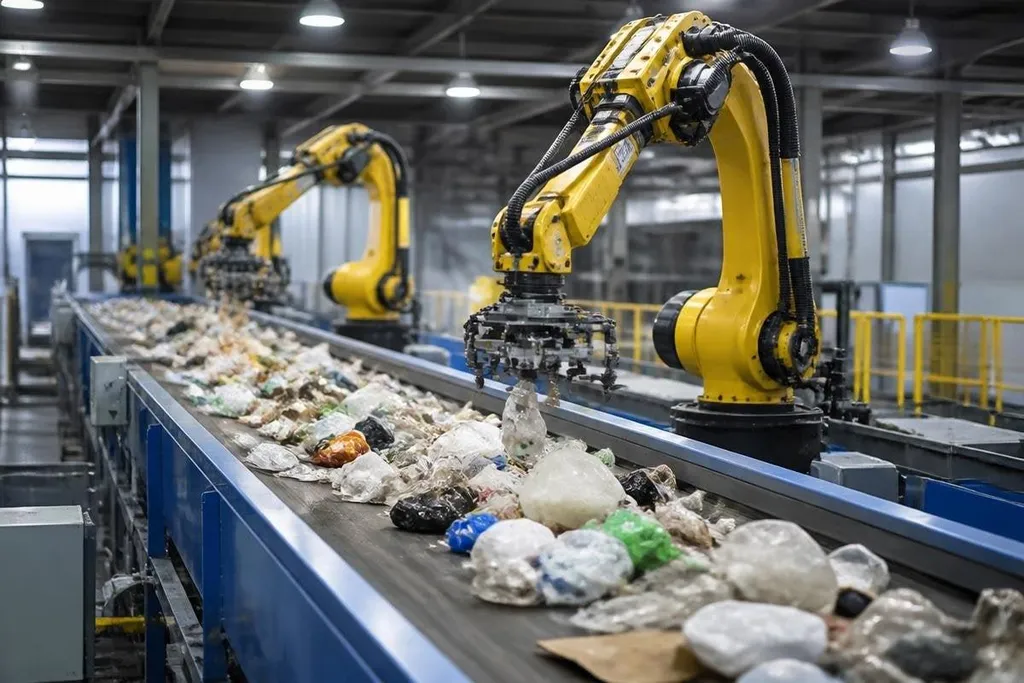
A waste robot has an easier job when the material arrives in a fixed place, at a known speed, under steady lighting. That points to sorting lines and treatment plants before autonomous collection trucks on public streets.
Quick read:
- Conveyor sorting gives robots a controlled work area
- Cameras, LiDAR, and grippers solve different parts of the task
- People still handle safety checks, faults, and unusual waste
Where robots fit first
Waste collection looks like a natural job for automation, but streets add too many moving parts. Traffic, parked cars, damaged bins, weather, pets, and people can all change the scene before a robot reaches the next stop.
A sorting plant removes much of that uncertainty. Waste moves along a conveyor, the camera sees it from a known angle, and the robot works inside a marked zone. That setup lets engineers measure the job and set clear limits.
The first useful systems will likely handle narrow tasks such as picking bottles from a mixed stream, removing items that can damage equipment, or moving sorted material into a bin. Each task has a defined object, location, and handoff point.
That focus matters for an operator paying for fewer stoppages. A robot that removes one class of item from one conveyor can be checked against a clear result. Asking a robot to understand every object in a street bin creates a much larger problem.
How the system works
A sorting robot needs three parts to work together. A camera records the item. Software estimates what it is and where it sits. An end effector, meaning the tool at the end of the arm, picks or pushes it into the right stream.
LiDAR can add distance data when the camera cannot judge height well. A gripper may suit a bottle, while an air nozzle or paddle may work better for a light wrapper. The tool has to match the waste, or the arm will spend time correcting failed picks.
The conveyor speed also sets the pace. Software must account for the time between seeing an item and moving the arm. A small error grows when objects overlap, fold, or arrive in a pile.
A sorter’s claimed accuracy matters only alongside the waste mix, belt speed, and test date. Waste management robotics reports can connect those details to the machine and result, so a plant manager can judge whether a new system fits the line before the next section examines where robots still struggle.
What robots still struggle with
Waste is hard to handle because it changes shape. A clean plastic bottle is easier to spot than a crushed bottle covered by food waste. Black plastic can also give some cameras less useful image data, while wet material can make objects stick together.
Safety adds another limit. Conveyors, compactors, shredders, and robotic arms all have moving parts that can hurt people. A plant needs guarded zones, emergency stops, lockout procedures, and a clear way for a worker to clear a jam.
Maintenance matters too. Dust can cover lenses. Loose film can wrap around a shaft. A gripper can wear down or pick up residue from the material. A system that sorts well during a clean demonstration may need more service in a plant that runs all day.
Collection robots face a second problem: the value of autonomy depends on the whole route. A truck still needs a safe loading method, a full-bin check, a return plan, and a worker response when something blocks the path.
A robot that handles one part of that route may leave the costly parts untouched.
I'd skip any system sold on object recognition alone. The useful question is how it handles missed picks, jams, dirty sensors, and a worker entering the cell.
A buyer's checklist
Before choosing a waste robot, check these points:
- Name the material: Set the first task around a defined waste stream, not “mixed waste” as a broad promise.
- Count the handoffs: Record where a person loads, checks, clears, and removes the sorted material.
- Test dirty items: Include crushed, wet, covered, and partly hidden objects in the trial.
- Measure the stoppages: Log sensor cleaning, jam clearance, tool changes, and software faults.
- Price the full cell: Include guarding, conveyors, cameras, grippers, service, training, and spare parts.
- Set the exit rule: Decide what result ends the trial and what result sends the system back for changes.
That checklist keeps the purchase tied to plant work. It also gives the supplier a fair test, because the target material and failure cases are written down before the robot starts.
The next useful step is a small sorting cell with a measured waste stream, a named failure limit, and a worker who can stop it safely. Until a system passes that test for the full operating period, its role belongs on the sorting line, not across an entire city.